German cooperation, through the German Development Bank – KfW, delivered three new headquarters to Colombia’s National Natural Parks that will strengthen environmental management and institutional presence in strategic regions for biodiversity conservation and peace building in the country.
The new infrastructure includes an administrative headquarters for the Orinoco Territorial Directorate, located in Villavicencio; an operational headquarters for the Sumapaz National Natural Park, in the municipality of Cubarral, in the department of Meta; and a headquarters for the Northeastern Andes Territorial Directorate, in Bucaramanga, Santander.
These spaces were conceived to strengthen the work of the park rangers and, at the same time, become points of articulation between institutions, communities and allied organizations, with the purpose of advancing environmental conservation and sustainable development of the territories.
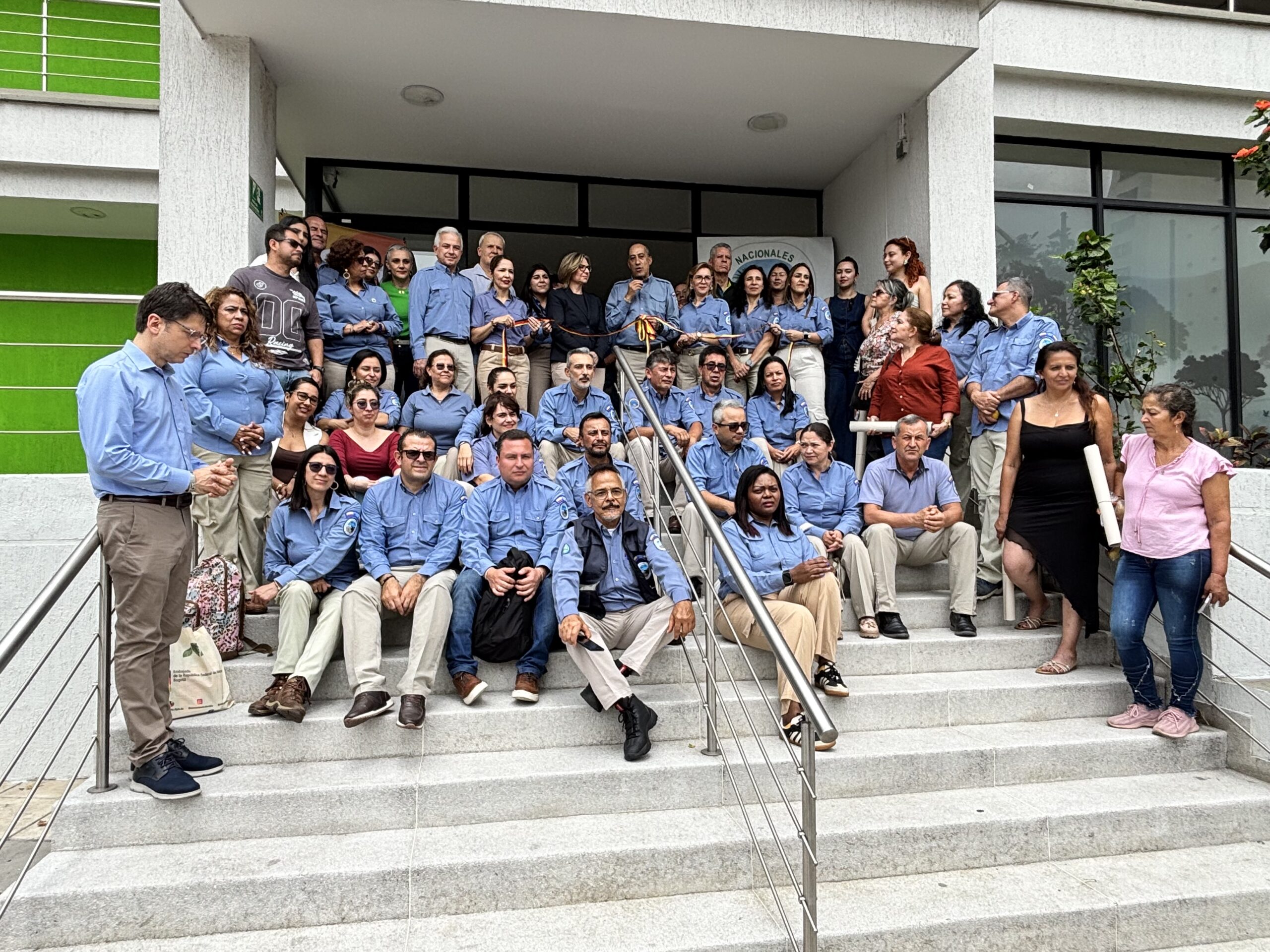
The handover of the Villavicencio and Cubarral sites took place on April 23 with the participation of, among others, Luisz Olmedo Martínez Zamora, general director of the National Natural Parks of Colombia; Martina Klumpp, German ambassador in Colombia; Katharina Anschütz and Sandra Castaño of KfW.
During the ceremony, Ambassador Martina Klumpp emphasized that these new headquarters represent a decisive step towards consolidating the institutional presence in a strategic region for Colombian biodiversity. She also highlighted the Protected Areas and Biological Diversity Program as one of the emblematic initiatives of German cooperation in the country.
On the other hand, the inauguration of the Bucaramanga headquarters took place on May 7, within the framework of the Public Hearing of Accountability 2025-2026 of the National Natural Parks of Colombia. The event was attended by Esther Gravenkötter, director of the KfW Colombia office, and Matthäus Hofmann, sector specialist of KfW Germany.
Beyond the physical infrastructure, the new sites are projected as spaces for environmental education, regional articulation and knowledge management, where nature conservation is built jointly with the communities and where international cooperation translates into concrete results for the territories.