
Coming across a remanufactured garment is a sensory experience. The eyes roam over it looking for the seams that unite textiles of different origins, perhaps made in distant cities, while the hands explore the textures and colors that give life to a unique piece that tells stories.
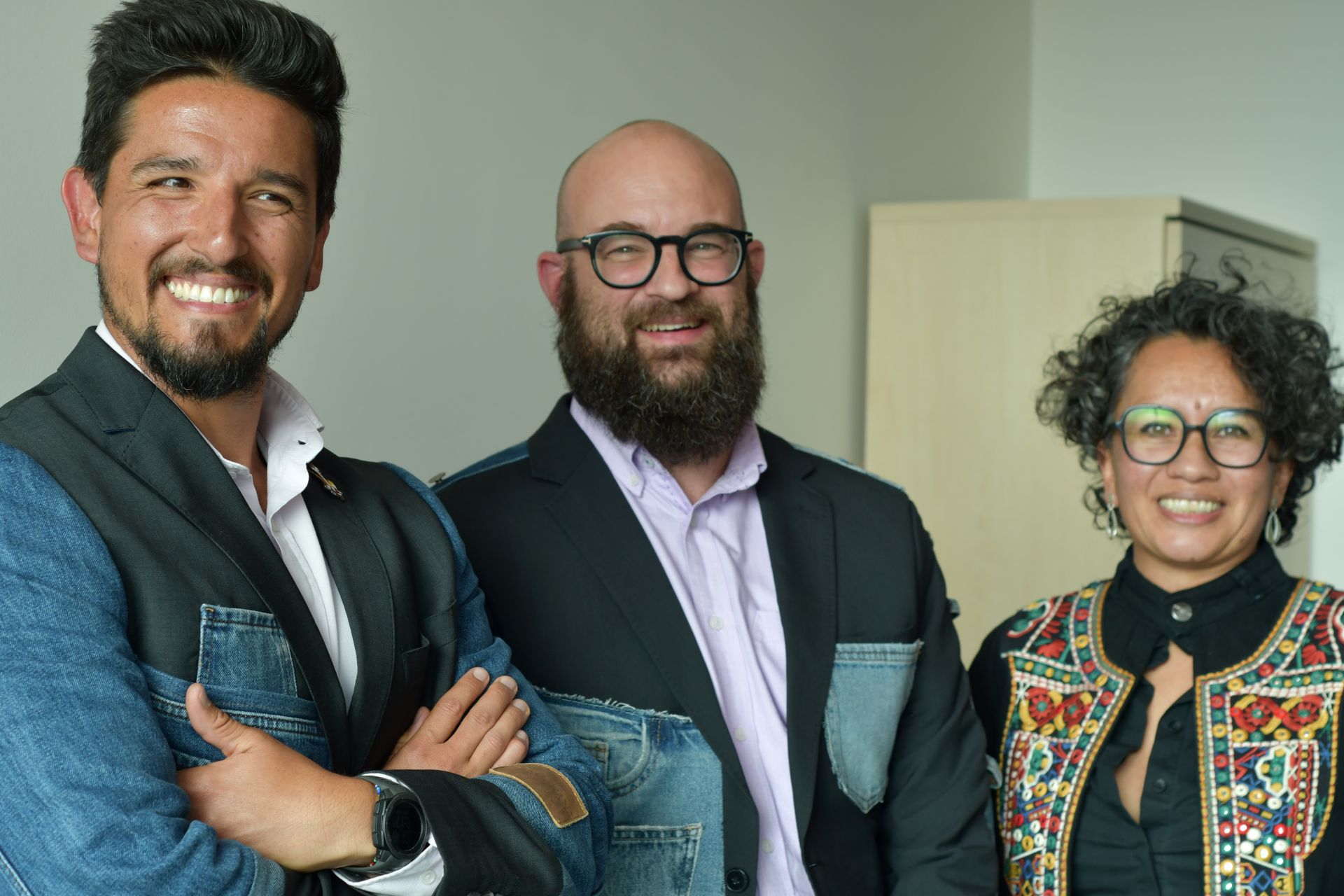
So began the conversation between Stephan Reichert, Vietnam Pereira and Peter Förster, members of the German cooperation in Colombia. The talk focused on exchanging their perspectives on the circular economy and textile remanufacturing.
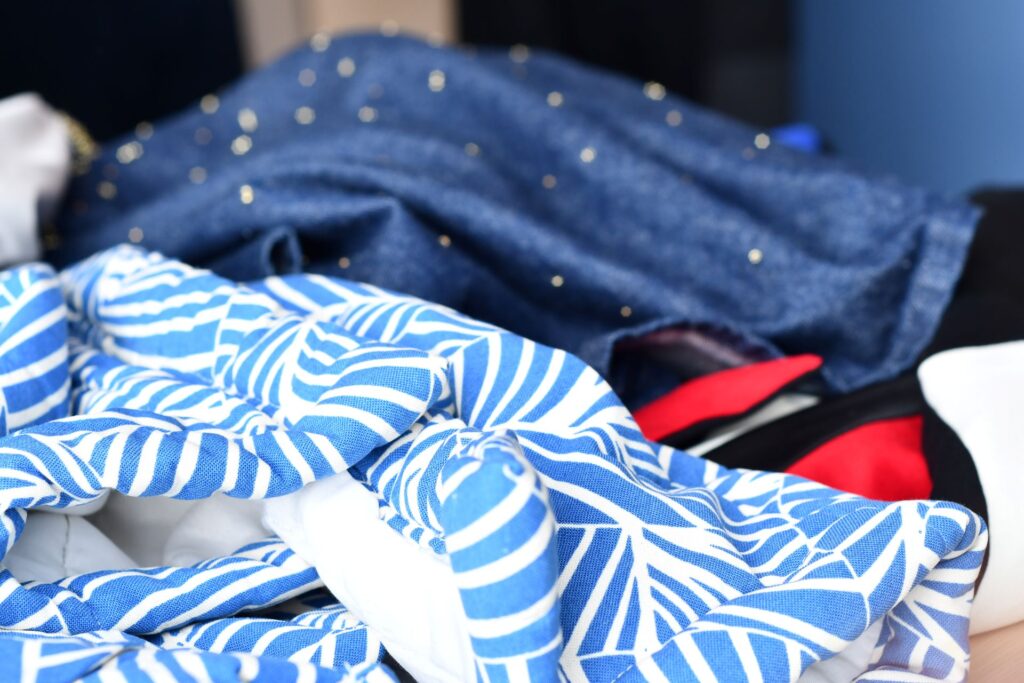
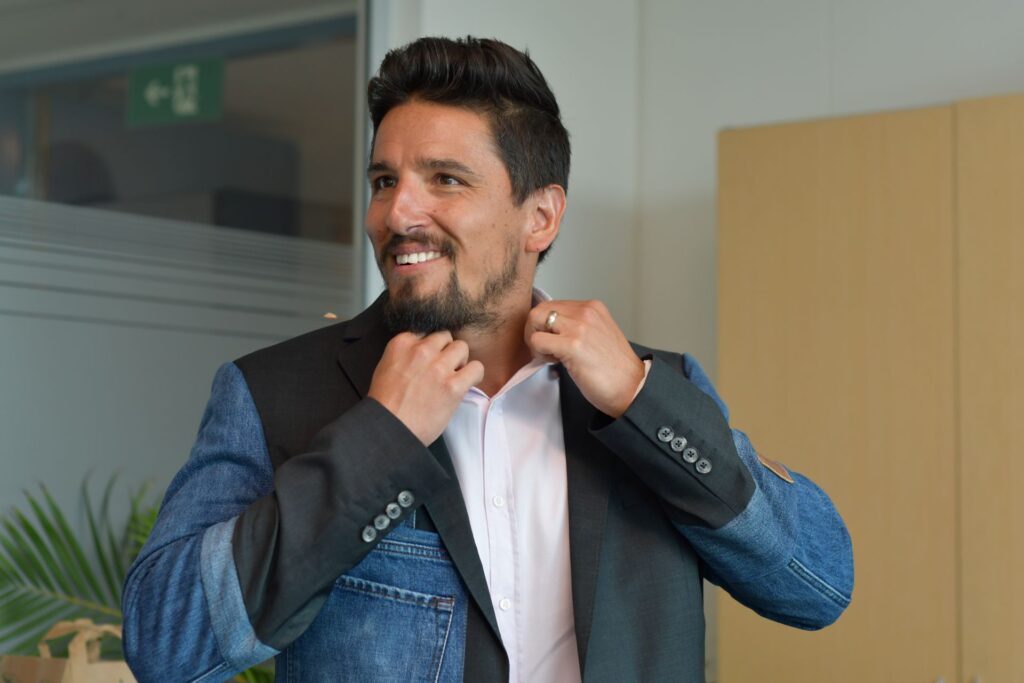
For the first time, Stephan tried on a remanufactured garment: a jacket that gives a second chance to disused materials and mixes textiles from a blazer and a jean collected through Renovamoda, the network of containers in Bogotá where citizens can deliver used textiles for reuse.
The jacket was made by the “Manos reparadoras” collective, led by the District Environment Secretariat and made up of women from different neighborhoods of Bogotá who are dedicated to making garments and who have received support from the German Development Cooperation – GIZ to remanufacture garments.
“It feels super comfortable, I don’t know if I’m going to give it back to you,” laughs the head of cooperation at the German Embassy in Colombia. Stephan avoids wearing ties and considers fashion a practical decision, focusing on clothes that make him feel good. Although this is his first experience with them, he finds the remanufactured garments important because of the political message they send.
“This planet can’t take it anymore. Thinking about how we dress, what we eat and how we transport ourselves is something we do for ourselves, but it also communicates – it is a statement. We must make it visible that there are other consumption alternatives, and this is something we are trying to do from German cooperation in Colombia.”
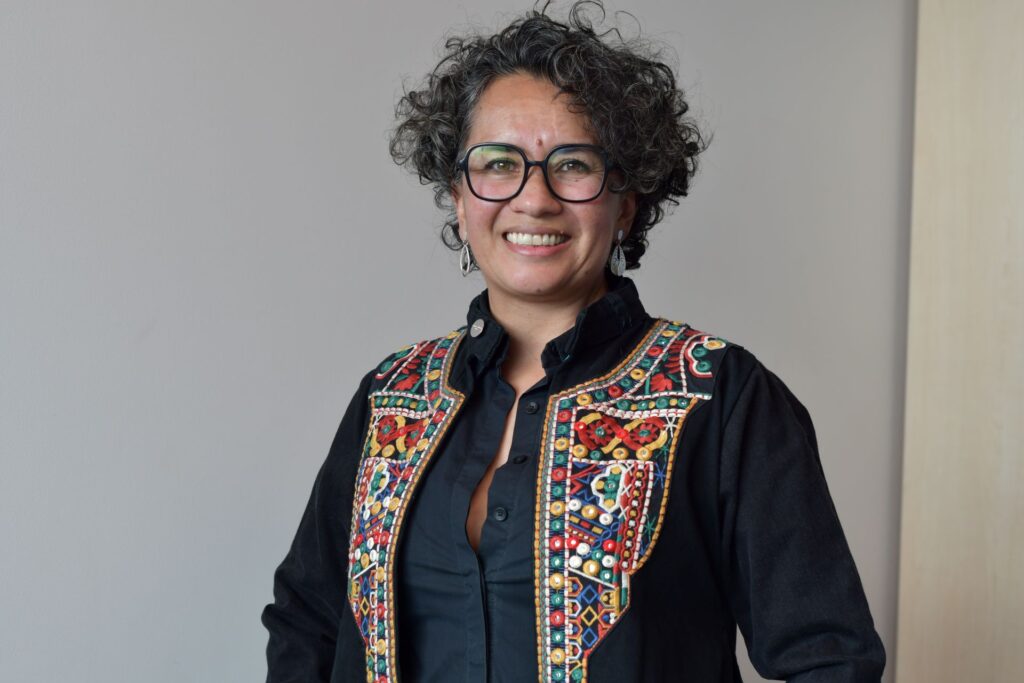
Vietnam, a development cooperation officer at the German Embassy in Colombia, uses her own remanufactured garments in her high-level meetings. She grew up in a household of many people, where she acquired the habit of giving clothes a second life. She believes that things that are in good condition should not have to end up in the trash. “I learned to sew by hand by making mistakes; breaking needles and snapping my fingers, because everything should be repairable.”
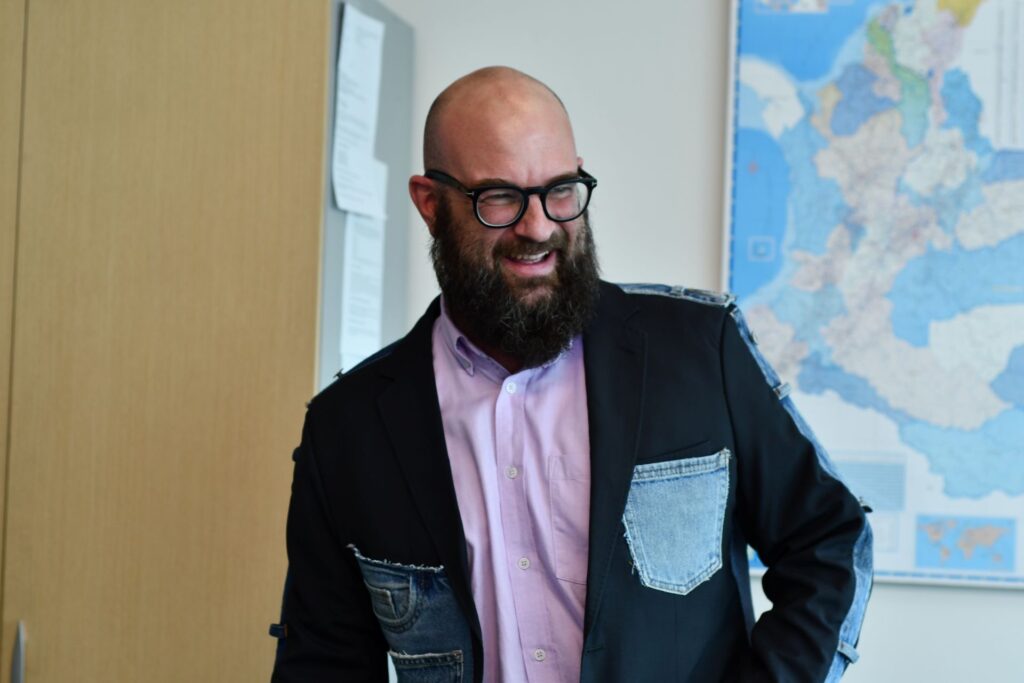
Peter, head of the Prevec III project at GIZ, attends office meetings in his remanufactured jackets and avoids wearing shirts where the brand name can be seen. For this conversation, he wore a jacket also made by the “Manos Reparadoras” collective, made from textiles from the Renovamoda container network.
His experience with remanufactured clothing comes from childhood, as he inherited garments from family members that were sometimes repaired before they reached his hands. The use in a more conscious way started from his work, with a GIZ circular economy project that focused on the textile sector.
“When I saw the quality and the remanufacturing process I started to fall in love with the stories behind it. I bought my first remanufactured jacket made from a blazer that no longer fit me. From that moment on I see garments with different eyes, as relics that can be transformed,” he says. “A lot of the clothes we wear are made by machines in standardized processes. These garments, on the other hand, are made by the hands of a person with a particular talent that also includes your taste and style,” Peter adds.
There are more and more collectives that promote the circular economy and the remanufacturing of materials in Colombia, avoiding the use of new materials and contributing to reduce polluting emissions. However, the contrasts around the act of dressing are marked, since in some sectors the belief still persists that a person’s energy remains in their clothes and this is the reason why garments are often not given a second chance.
These conflicting positions are also seen in Germany. “There are people in Berlin who are very conscious and there are neighborhoods where many people walk around in recycled clothes. There are also places where you’re not going to see anyone wearing these clothes. In the middle of these two realities it is important to contribute to this discussion,” says Stephan.
Responsible consumption is not only an environmental issue. In the fashion industry, the majority of the workforce is female, so the decisions made in the morning in front of the mirror can also impact the women behind the scenes.
For Vietnam, “if we are able to generate changes in the production chain through cooperation, preventing women from working in precarious conditions, we are contributing to improving their living conditions and those of their families. Peter adds: “The circular economy allows us to integrate people in vulnerable situations into productive, dignified and high-value processes. This is a great motivation for my work.
“German cooperation, understood in a broad context, strives for the recognition and promotion of good practices that make another world possible. It is not easy, and we are not going to change the global situation with one project, but we are taking small steps along the way,” Stephan concludes.