
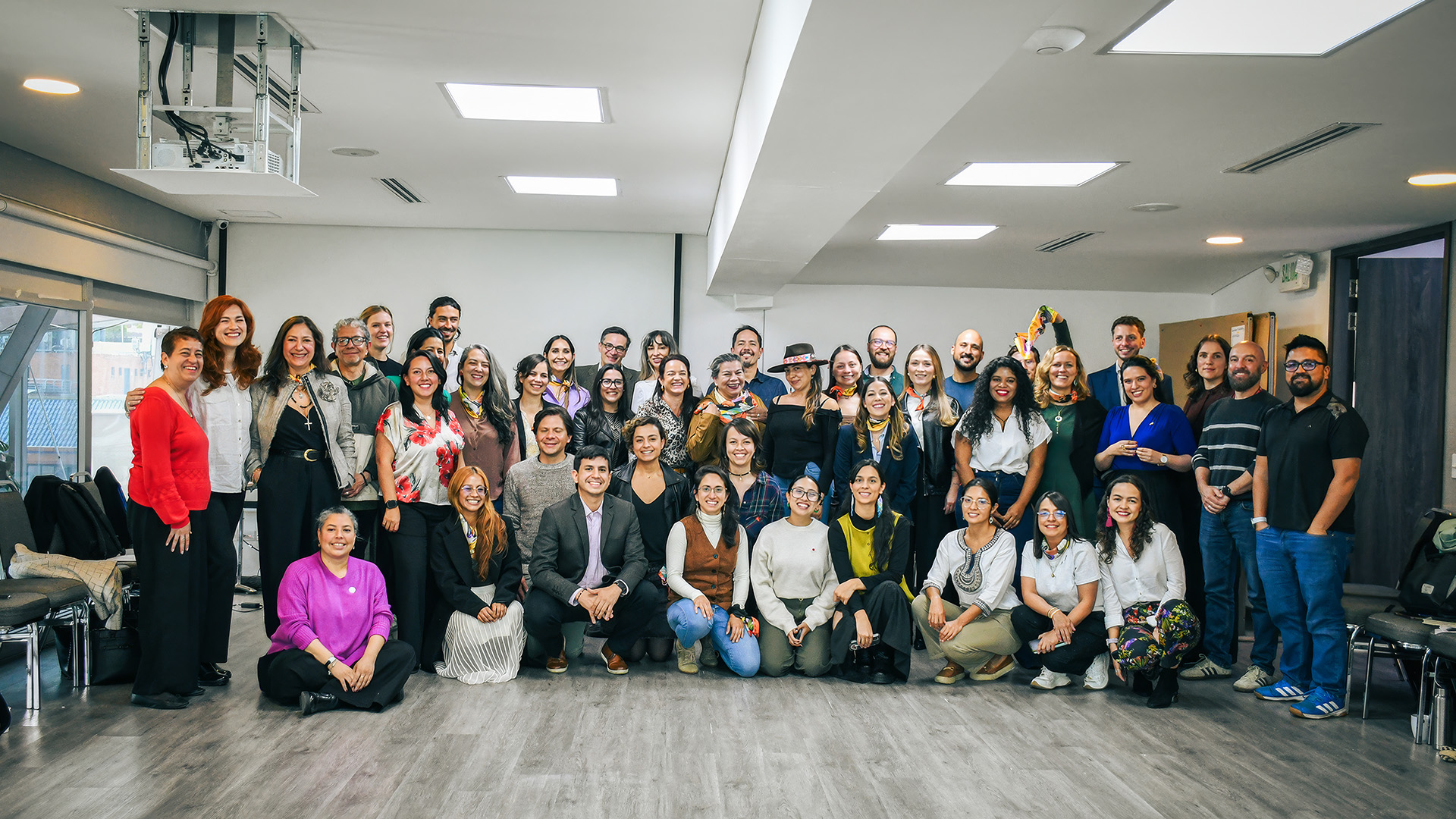
On May 7, the IKI Interface Project, implemented by the German Development Cooperation – GIZ, held the IKI Cafecito dedicated to the cross-cutting role of gender in climate, biodiversity and just energy transition. The meeting brought together participants from 14 International Climate Initiative (IKI) projects and representatives from government and civil society to exchange lessons learned on gender mainstreaming and its key role for fairer and more effective climate action.
The event featured opening remarks by Janina Heim, environmental counselor of the German Embassy in Colombia, who stressed that the impacts of climate change and biodiversity loss are not gender neutral, and that integrating this approach in a cross-cutting manner is essential to generate fairer and more effective actions.
Afterwards, a discussion brought together women leaders, representatives of the Ministry of Mines and Energy and experts from different territories and sectors around the “Regional Women’s Leadership Course”, an initiative that seeks to strengthen women’s environmental leadership to promote a just, inclusive and resilient energy and climate transition in Latin America and the Caribbean.
Among the speakers, Yuvelis Natalia Morales Blanco, environmental leader and winner of the Goldman Prize 2026, emphasized that “women are like rivers: when we meet, we are unstoppable”, and that initiatives such as this course are fundamental to recognize the work and values of women, as well as the paths built in sisterhood, encounter and hope.
In addition, four IKI projects -De Raíces a Mareas Ecosistemas Resilientes, Lagos Vivos Biodiversidad y Clima, CERFER and Interfaz- shared their experiences and lessons learned in the incorporation of the gender approach, making it clear that this is not an additional component, but an axis that strengthens results, amplifies local leadership and nurtures public policies. The meeting reaffirmed that integrating gender into climate action is not only a question of equity, but also a condition for the effectiveness and sustainability of IKI interventions.
This meeting was organized by the IKI Interface Project, implemented by GIZ on behalf of the German Federal Ministry for the Environment, Climate Protection, Nature Conservation and Nuclear Safety (BMUKN), within the framework of the International Climate Initiative (IKI).