
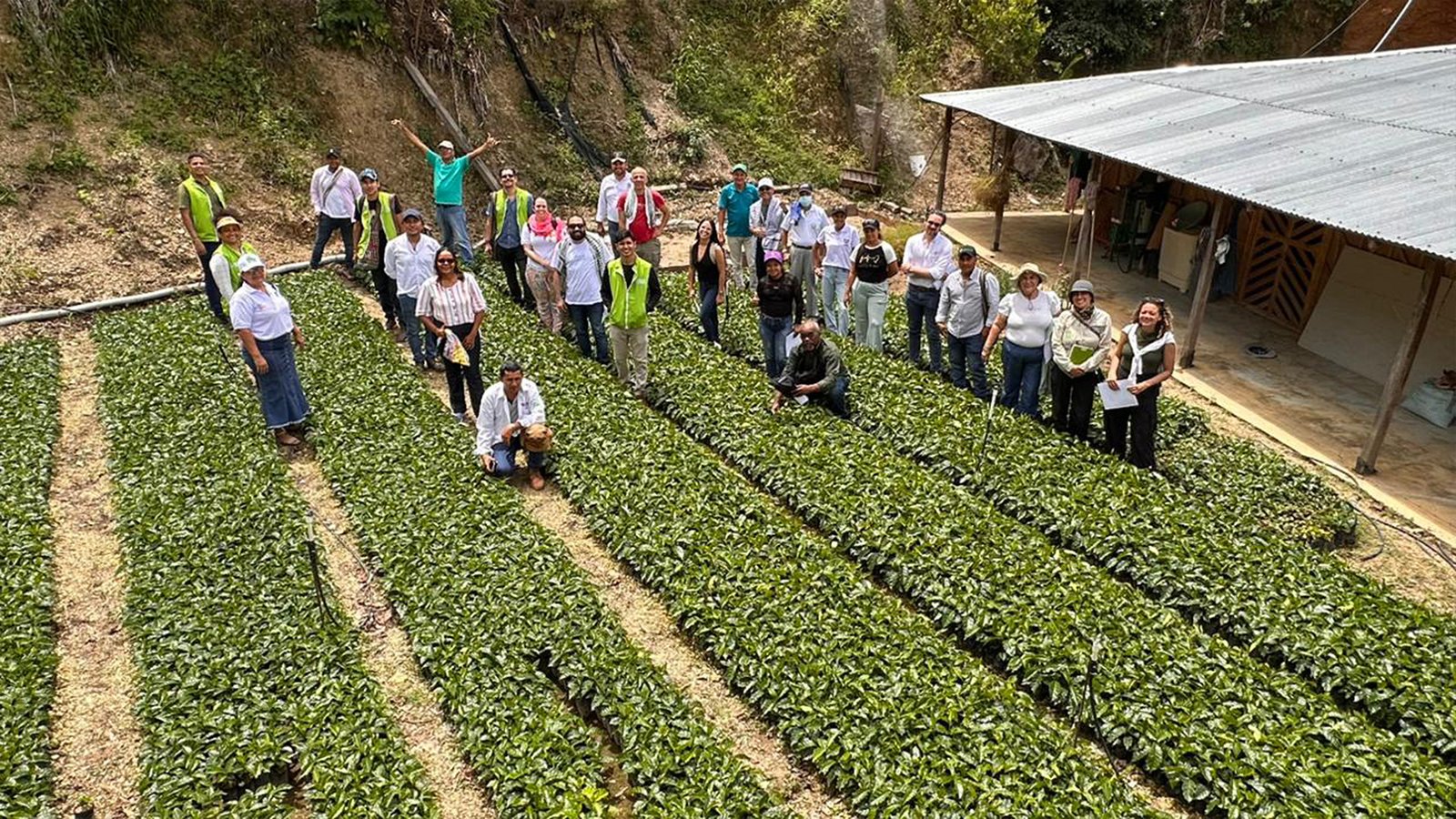
Within the framework of the IKI JET project (Innovation Regions for a Just Energy Transition), the Wuppertal Institute is moving forward with the implementation of its innovation laboratory in the life corridor of Cesar, Colombia. After a mutual learning and co-design phase developed in 2025, the initiative has entered its experimentation stage, transforming local knowledge into concrete solutions for the economic diversification of the region.
The process is based on a four-stage methodology: understanding, co-design, experimentation and co-evaluation. During the mutual learning sessions held in July and September 2025, representatives of the government, academia and civil society identified that the energy transition should not only be a national plan, but a construction from the territory that heals the social fabric and strengthens productive autonomy.
As a result of this co-creation process, two strategic pilot projects designed to strengthen the capacities of two local organizations leading change have emerged:
- Asociación de Vecinos de la Vereda el Caballete (ASOVECAB): work is being done to strengthen its organizational and productive proposal based on the use of native species such as guáimaro, linking the restoration of water sources with the development of sustainable markets.
- Visa Usa Community Tourism Corporation: seeks to strengthen its model of rural community-based tourism operating agency, integrating historical memory, inclusion of youth and women, and environmental conservation as alternatives to mining dependence.
“Local initiatives, although small in scale, contain the seeds of regional transformation. Our role is to co-design tools that enable these models to scale, ensuring that the transition is led by communities and backed by coherent policies, stable funding and long-term institutional accompaniment,” says the Wuppertal Institute team.
This effort is possible thanks to the collaboration with strategic allies such as the University of Magdalena, the Development and Peace Program of Cesar and La Guajira (PDPCG) and Tierra Digna. These processes demonstrate that the decarbonization of the economy in Colombia requires, above all, a solid social base, gender inclusion and decent living alternatives for the communities in the transition territories.