
How can we bring one of Colombia’s most extraordinary and remote places to those who will likely never be able to visit it in person? Technology is opening up new ways to learn about, appreciate, and protect our natural and cultural heritage.
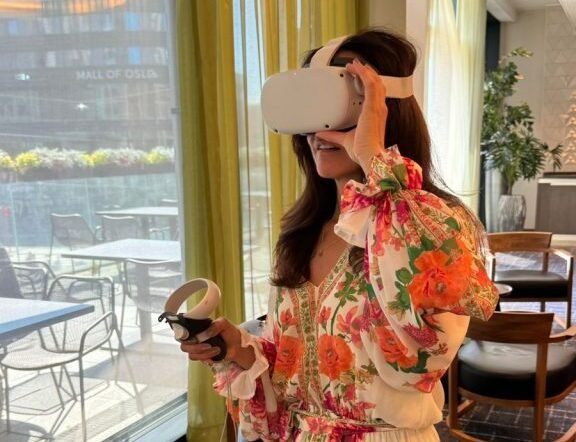
Through a virtual reality experience, hundreds of people have been able to explore the Serranía de Chiribiquete National Natural Park, take in its majestic Amazonian landscapes, and get a closer look at the ancient rock art that makes this region a place unlike any other in the world.
Covering nearly 4.3 million hectares, Chiribiquete is Colombia’s largest terrestrial protected area. It plays a vital role in the ecological connectivity of the Amazon, the protection of biodiversity, and the regulation of the planet’s water and climate systems. Due to this exceptional mixed value (natural and cultural), it was inscribed by UNESCO on the World Heritage List in 2018.
Precisely because of its immense ecological richness and fragility, Chiribiquete is not open to conventional tourism. In this context, virtual reality emerges as a sustainable alternative to bring the park to new audiences without endangering its ecosystems or the isolation of its indigenous communities, offering an immersive experience that combines images, sounds, and three-dimensional tours.
The initiative is part of the Protected Areas and Biological Diversity Program funded by the KfW Development Bank on behalf of Germany’s Federal Ministry for Economic Cooperation and Development (BMZ). In partnership with Colombia’s National Natural Parks, the goal is to combine cooperation, innovation, and institutional strengthening to protect the country’s natural heritage and raise public awareness of its importance.