
In the Guaviare rainforests, açaí grows on palm trees that can exceed 25 meters in height. Harvesting its clusters without cutting down the trees requires technique, skill, and a precise understanding of the forest. Over generations, the Nukak people have developed ancestral knowledge that allows them to locate the palms and recognize the exact point at which the fruit ripens. This knowledge, historically undervalued by formal markets, now underpins the first link in the açaí value chain in the region.
Indigenous knowledge and techniques as the foundation of a sustainable supply chain
The analysis of Amazonian fruit value chains in Guaviare —conducted by the ProBosques II program of the German Development Cooperation (GIZ) and the Guaviare Departmental Government—confirmed that the harvesting of raw materials is one of the most strategic links in the chain and, at the same time, one of the most challenging. Communities with a tradition of hunting and gathering play a significant role in this process; for them, the commercialization of açaí represents a supplementary source of income and an opportunity to strengthen their livelihoods while conserving the standing forest.
The Nukak people play a central role in this dynamic. Their understanding of natural cycles and their ability to harvest palm fruits without cutting down the palm trees contribute to the sustainable use of the ecosystem, connecting the Guaviare forests with markets in cities such as Bogotá. Recognizing and highlighting this contribution is not only a matter of justice and participation, but also an essential condition for building more inclusive supply chains, equitably distributing the value generated, and protecting the Colombian Amazon.
A Conversation from the Heart of the Jungle
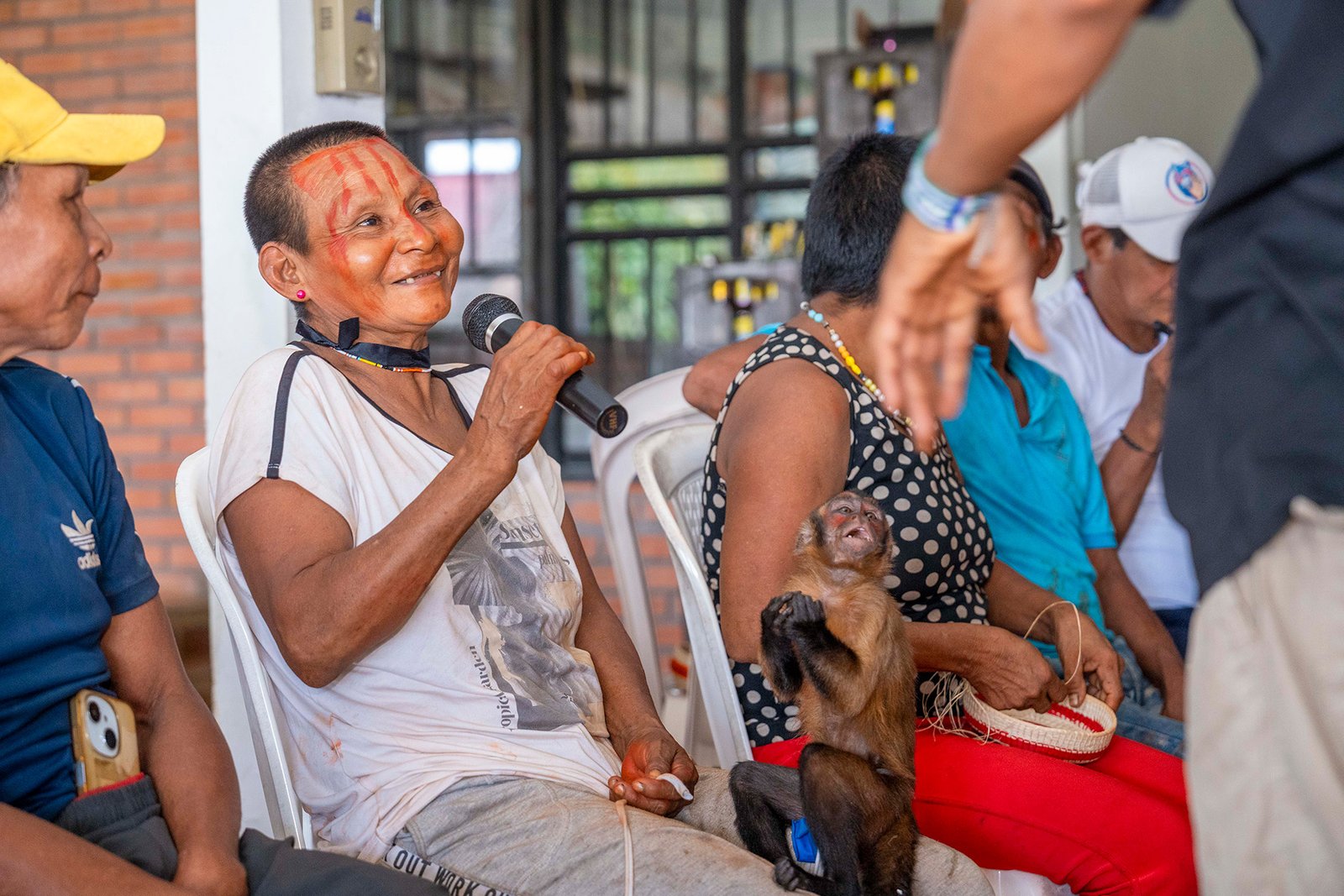
In June, during a gathering that brought together Nukak communities from the villages of Tierra Alta, Filo de Hambre, Caracol, and Agua Bonita, an unprecedented space for conversation about the future of açaí was created. Through dialogue and the exchange of experiences among the communities, local processing companies, and institutional stakeholders, key agreements were reached to strengthen commercial relationships based on trust, respect, and mutual benefit.