
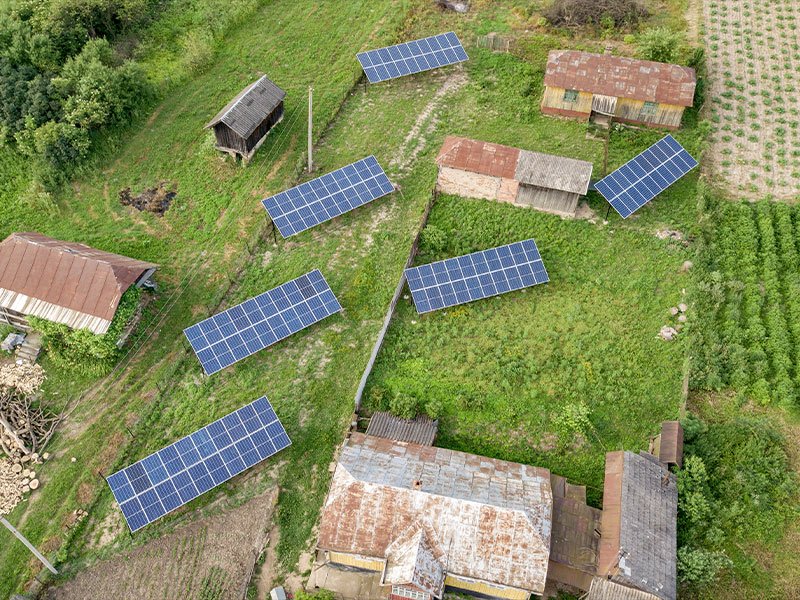
Energy Communities (ECs) have established themselves as a strategic pillar of the Just Energy Transition in Colombia by integrating climate mitigation, access to energy, territorial development, and community governance. Despite recent regulatory advances, significant implementation barriers remain, as current financing mechanisms focus almost exclusively on initial capital expenditures (CAPEX), neglecting operational sustainability, risk management, and capacity building. Furthermore, the lack of conventional collateral and credit history limits the scaling up of community projects beyond isolated pilot projects, especially in areas with marked infrastructure disparities between the National Interconnected System and the Non-Interconnected Zones (ZNI).
To address these structural bottlenecks, the projects implemented by GIZ— Transformative Climate Finance — Redirecting Financial Flows and Private Sector Mobilization (TCF) and the IKI Interface, in coordination with Colombia’s Ministry of Mines and Energy, joined forces to develop a comprehensive technical, organizational, and financial approach tailored to local realities. This initiative seeks to align financial systems with the objectives of the Paris Agreement, the NDCs, and national climate legislation, mobilizing public, private, and international climate finance. By addressing both financing gaps and broader operational governance conditions, the initiative establishes a framework for scalable and long-term viable Energy Communities capable of driving productive development in Colombia’s most underserved regions.
Both projects aim to promote innovative models for a just energy transition, fostering a new generation of energy communities that combine autonomy, productivity, and sustainability. Under this approach, energy is viewed as a driver of productive development and social cohesion, capable of reducing operating costs, strengthening local economic activities, and creating the conditions for greater economic and organizational resilience.
The financial model is developed as a technical tool that translates this vision into quantifiable and comparable economic projections, facilitating informed decision-making. This model was designed as a support tool for the technical, economic, and organizational structuring of these initiatives, within the framework of projects aimed at promoting a just energy transition in rural and semi-urban areas. It also aims to support processes in which organized communities, public entities, energy sector stakeholders, and development partners collaborate to implement collective energy generation and use schemes, in accordance with current regulations and territorial development objectives. The respective documents developed are published in the IKI Colombia library at the following link: Documents on the Structuring and Financing of Energy Communities in Colombia – IKI Colombia